
The case file
An organized record. An unaltered original.
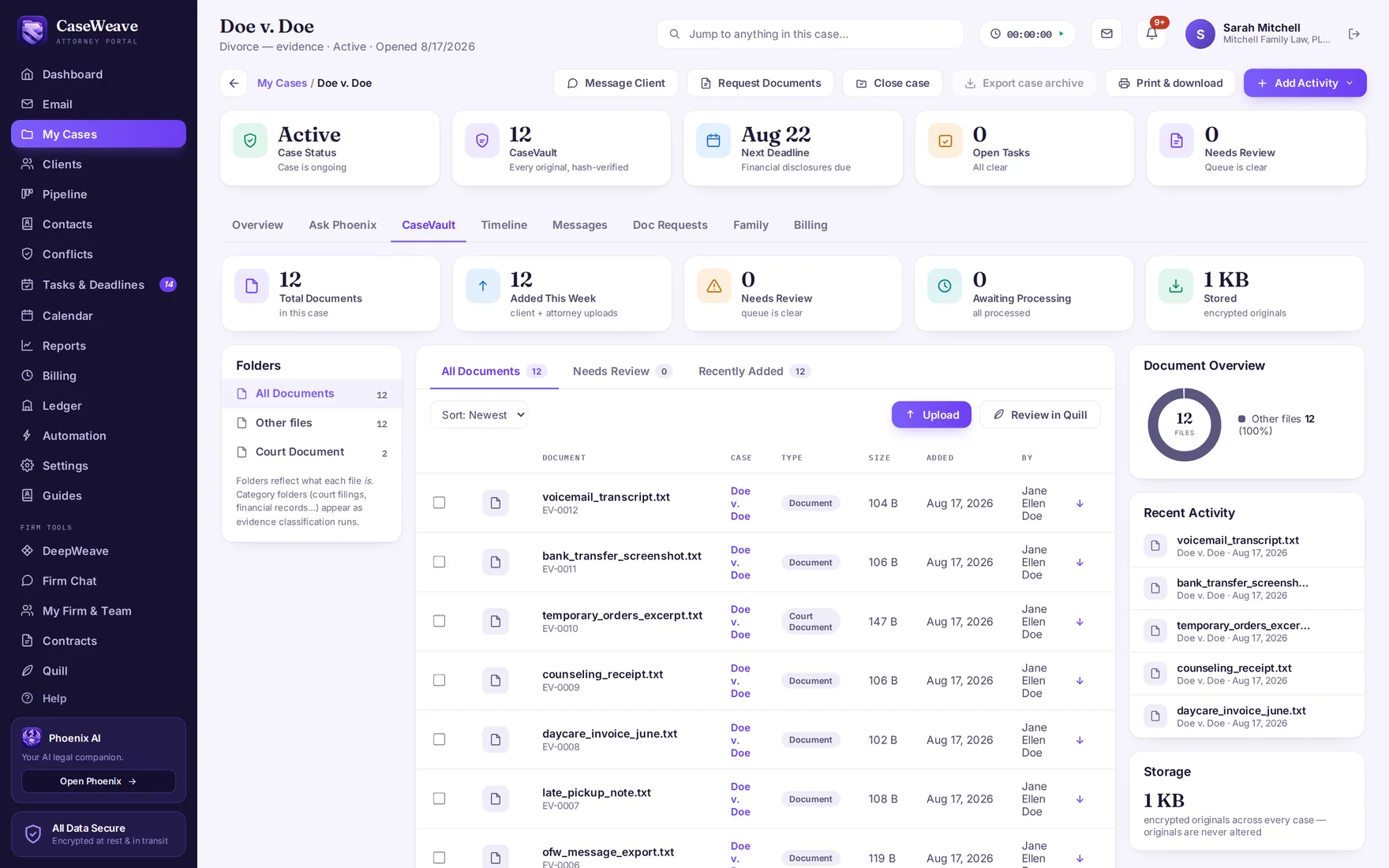
CaseVault organizes incoming files and preserves the originals separately from working copies and summaries. A file fingerprint helps your team verify that the original has not changed.
From incoming file to a record your team can review.
Untouched, and provably so.
The file that entered the case is the file that stays in the case. Text layers, rendered pages, summaries and labels are separate objects beside it — the original is never modified, and its fingerprint travels with every export.
- Content-addressedStorage is keyed by the file's own SHA-256 — a byte-identical re-upload creates nothing new.
- Encrypted at restSealed under the case's own key before it touches storage. The full model.
- On the timelineEvery item lands on the matter's dated chronology, woven with events, messages and tasks.
- In the audit chainCapture, classification, access, export — every action appends to a hash-chained log that verifies itself on open.
A convincing look-alike fails the check. That is the entire point of a fingerprinted record.
Why the hashes existWhere it goes next
Exhibit sets, court packages and printed output carry the record's fingerprints with them — see Documents & court output.
Put a document in. Watch what happens.
Watch an incoming document become an organized item, then inspect its original and review history.