
Built for divorce
Built around the details divorce cases depend on.
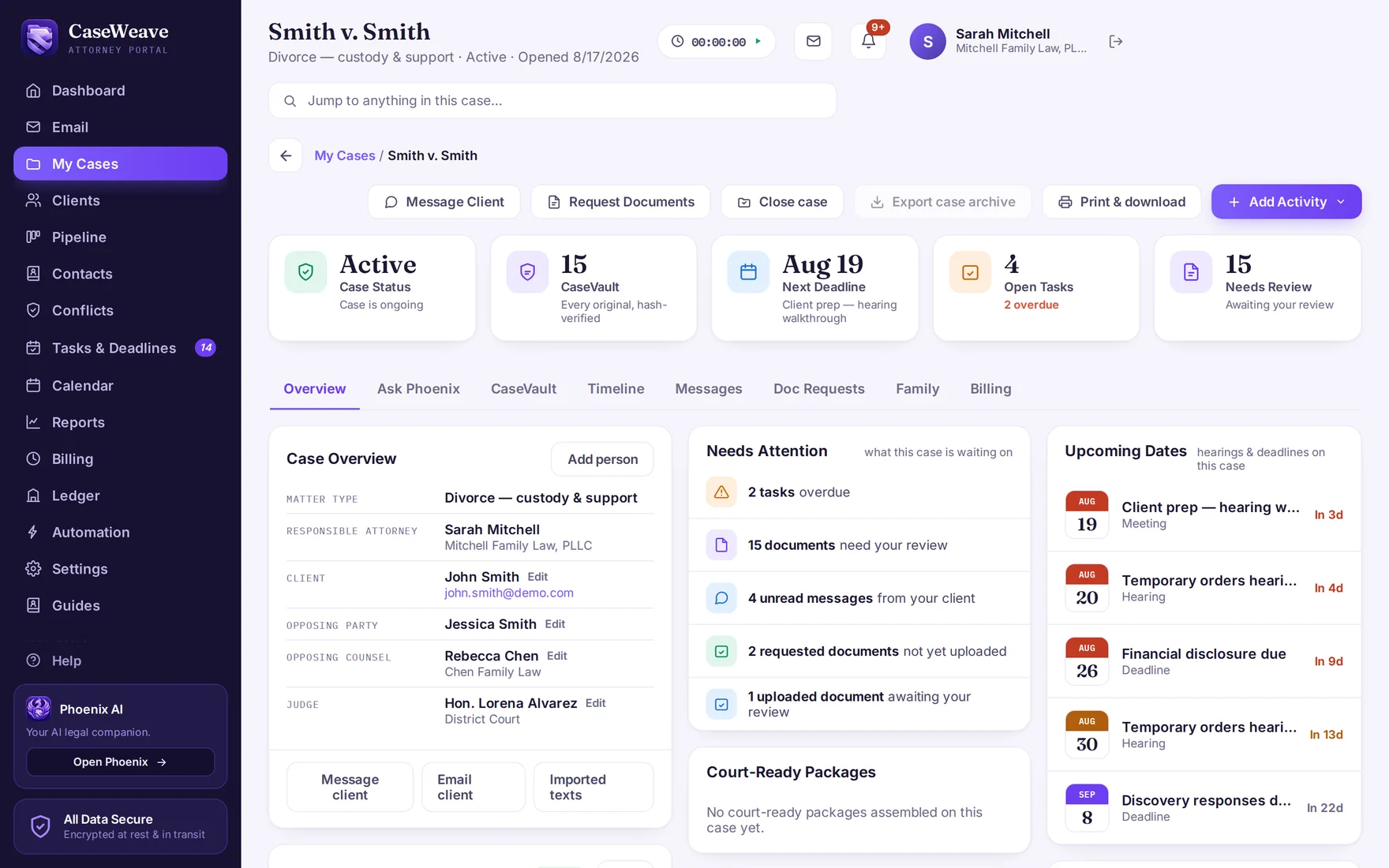
Ready for the way your firm works. Start with fields for marriage, separation, children, support and property, plus case stages designed for divorce practice. Your team adds the facts and shapes the workflow.
The right starting structure for every matter.
Setting up a general-purpose platform for family law means someone at the firm deciding that a separation date matters, that a guardian ad litem is a role, that Discovery should fire a checklist. In CaseWeave that thinking is already done, and it's editable as a firm template when your practice does it differently.
- The matterFamily-law fields grouped by marriage, children, support, property and process — present on day one, shaped to your firm's template.
- The castClient, opposing party, children, opposing counsel, judge, mediator, guardian ad litem, expert — real roles with real meaning in the file.
- The artifactsText threads, exchange logs, disclosures, conduct, spend — the things divorce cases are actually made of, treated as the record.
- The requestsThe documents every divorce needs — tax returns, paystubs, statements, message histories — ready as preset checklists.
The pipeline runs the way the case runs.
Six stages, aging on every one, and checklists that fire when a matter arrives. Pick a stage.
The prospect arrives through your intake form, the conflict check runs before the matter exists, and engagement paperwork goes out for signature. The client's app is ready the day they are.
Why the practice area matters this much.
Divorce evidence is unlike any other practice area's: it's personal, it's continuous, and half of it happens on the client's phone. CaseWeave treats a custody exchange log as what it is — part of the record of a family's life, kept carefully.
Bring a real divorce case to the demonstration.
Explore a demonstration matter with the family-law details, documents and workflow your team needs.